



In the fast-paced world of construction, it is always a heavy task to complete the project on time and under budget. And one thing that helps us greatly to achieve this is BIM electrical workflows. As for Australian contractors, the pressure of designing and installing electrical wiring is growing day-by-day. They are experiencing traditional problems that are ultimately resulting in site delays and mid-construction surprises.
Why Australia’s Local Sites Face Delays in Electrical Installation
The geography of Australia makes any construction project a unique and complex one. The electrical contractors of Australia face a certain set of challenges that can easily push a project beyond the deadline, and it could also lead them to make heavy mistakes.
Here is a list of some challenges that make Australia’s local sites face delays in electrical installation.

Navigating AS/NZS 3000 Standards
Being compliant with the set standards is mandatory for contractors working in Australia. The AS/NZS 3000, which is also known as Wiring Rules, is a complex set of rules that wiring contractors have to follow. When the designs do not align with these rules, inspectors ask for rework, which results in massive work delays.
BIM electrical modeling helps teams to first meet these standards in the digital design before starting their work on the actual construction site.
Labor Shortage
Currently, the Australian construction industry is facing a significant shortage of skilled workers, or “sparkies”. In case of a labor shortage, contractors always try to make every hour of the job site count when their workers are there.
So, if your workers are sitting idle, waiting for a design clarification, you are losing money and falling behind schedule.
Supply Chain Lag
Waiting for special switchboards or custom cable trays to arrive from overseas or interstate can also stop progress for the time being. If the planning is not done right, then materials often come late or in the wrong quantity. This also leads to “no work” hours for the labor. BIM electrical enables contractors to know exactly the quantity of materials they are going to be required for installation.
Complex Tier-1 Project Requirements
Tier-1 construction companies (that handle large construction projects) operating in major cities like Sydney, Melbourne, and Brisbane always look for trusted and reliable subcontractors. If the electrical subcontractor is not using modern technology that a BIM company Australia can trust, then they will find themselves rejected from major government and commercial contracts.
To better understand how digital workflows streamline electrical systems, you can also explore our insights on how BIM electrical transforms design and installation processes.
How BIM Electrical Solves the “Delay Problem”
Building Information Modeling (BIM) is not just a 3D drawing; it is a roadmap for the entire project life cycle.
Zero Clashes
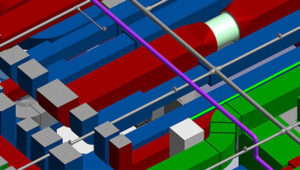
One of the most common reasons for site delay is “clash”. Imagine an electrician is planning to install a cable tray, but finds a massive AC duct in the way. With the help of electrical BIM modeling services, contractors can find and solve these clashes within the software before starting their work on the actual site.
Effective BIM coordination plays a crucial role in minimizing clashes, read more about how clash-free models help streamline construction workflows.
Precision Pre-Fabrication
A high-fidelity model gives you the advantage of building components off-site in a controlled environment. Once these components are built, these kits are brought to the site ready for installation. This quick approach is a hallmark of top BIM services in Australia.
Live Updates for Site Managers
In this digital age, there is no need for architects and contractors to carry around paper drawings. With BIM, professionals can use tablets to see the most current as built electrical drawings. This also ensures that every member of the team is working with a single source of truth.
Automated Bill of Materials (BOM)
BIM electrical software is capable of counting every nut, bolt, and pipe. This precision helps to order materials in the right quantity, so there won’t be any over-ordering, which leads to wasting money, or under-ordering, which leads to wasting time.
Faster Council and Safety Approvals
Another way in which BIM electrical helps to reduce the delay in electrical installation is that it helps contractors to provide local councils and safety inspectors with a clear, transparent view of the project. With this clarity, officials find it easier to know if the design meets all the standards or whether it requires some adjustments. This significantly speeds up the safety approval process.
Many on-site delays are also linked to coordination gaps, learn more about common MEP coordination challenges and how to fix them to improve project efficiency.
Beyond the 3D Model: Communication is Key
While this technology is very impressive, the real power of BIM lies in how it helps teams to work together in an effective way.
Bridging the Gap Between Office and Field
Many times, engineers sitting in the office and contractors on the site find disagreement between them. But, with a BIM electrical framework, they can easily find out if the design is actually buildable or not.
Along with that, the scan to BIM services Australia also make sure that the engineers sitting in the office are working with a perfect digital twin of the existing site.
Faster Request For Information (RFI) Turnaround
BIM also comes with a “visual Request For Information (RFI)” that helps professionals to solve any problem arising in the model. With RFI, contractors can send a screenshot of the 3D model to engineers quickly, instead of writing them a long email. After that, engineers can resolve the problem, and the contractors’ team can continue their work without much delay.

Why SmartCADD is Australia’s First Choice for Seamless Electrical BIM
As a leading BIM company Australia, SmartCADD understands that contractors need more than just 3D drawings. They need the data that can be used to get a detailed 3D model free from any errors and future surprises.
Here’s what makes SmartCADD Australia’s number one choice for flawless electrical BIM:
Tailored for the Australian Market
At SmartCADD, we don’t believe in a one-size-fits-all approach. Our team ensures that every detail is captured in the best possible way, along with keeping local standards in mind. So, whether you need point cloud to BIM Australia services for a new high-rise building, or 3D laser scanning services Sydney, you are always good to go with us.
Expert Modeling That Thinks Like an Electrician
Our electrical BIM modeling services are developed by people who understand the trade. By keeping our focus on “constructability”, we ensure that the switchroom layouts and cable routes we design are practical for the people installing them.
Reducing Rework with SmartCADD Precision
Rework takes a lot of time, which ultimately affects productivity. By providing highly accurate as built electrical drawings, SmartCADD helps contractors to minimize site errors by up to 30%. Our BIM electrical expertise ensures that you don’t face any rework with your electrical installation.
Your Partner from Design to Handover
SmartCADD stays with their clients from the initial BIM electrical strategy to the final handover documents. Our goal is to make sure that your project is a success, your client is happy and your site does not face any delays.
For a deeper dive into electrical-specific BIM practices, explore key concepts that every electrical engineer should know.
Conclusion
In today’s construction landscape of Australia, BIM electrical is no longer a luxury. It has become a necessity now. By automating material lists, identifying clashes and improving communication, BIM removes the barriers that traditionally cause project delays. You can reduce electric installation delays and ensure project success through the premier BIM services of SmartCADD


