
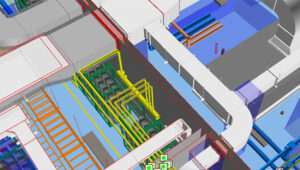
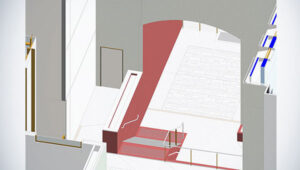
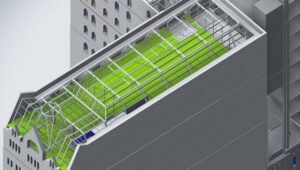
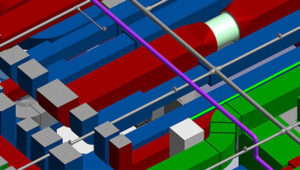



Getting involved with the right Scan to BIM services in Australia, you get accurate 3D scans and reliable models. You will have fewer mistakes, which saves you time and money with smoother coordination and stress. Whether you are working on a new site or restoring an older site, experienced professionals deliver accurate 3D laser scanning across Australia.
This guide walks you through how to find the right experts by comparing their skills and experience to your project.
Why Hiring the Right Scan to BIM Services Provider Matters
What Is Scan to BIM and Why It’s Critical for Australian Projects
Scan to BIM (Building Information Modeling) is a cutting-edge process to convert buildings into digital models. It includes,
- Architectural models. It starts with 3D laser scanning layouts.
- Structural elements.
- MEP (Mechanical, Electrical, Plumbing) systems.
It starts with laser scanning to 3D technology, generally using LiDAR.
These models are important for the AEC (Architecture, Engineering, and Construction) industry. It helps teams to see what’s really there. They use them to
- Plan renovations with fewer surprises.
- Manage facilities more properly.
- Meet Australian compliance standards for safety and energy use.
It’s a practical tool that makes complex projects easier to handle.
Discover how AI is elevating Scan to BIM – check out our new blog How AI Is Transforming Scan to BIM: Key Trends & Technologies
Why It Matters in Australia
In Australia, construction projects move fast, and the rules are strict. That is why Scan to BIM conversion services aren’t just helpful. It is important.
- For renovations and retrofits, Architects and engineers need accurate data before they start. Laser Scan to BIM services give them a clear picture of what’s already there, so they don’t have to guess. Every wall, beam, and pipe is mapped before the first design draft.
- For facility management, building owners use BIM models to track assets and plan maintenance. They also use it to optimize space. It’s a new way to manage a building over time.
- Detailed and precise paperwork is necessary to comply with Australian regulations for energy use, accessibility, and fire safety. Scan to BIM helps teams meet those requirements and avoid delays during council approvals.
Here’s how the process works.
- Scan the site with LiDAR to capture its shape
- Turn the scan into a 3D dot map that shows surfaces and details
- Clean the data and line up the scans correctly
- Make building and MEP models from the point cloud to BIM
- Check the model and export it in the format your team needs
Common Pitfalls of Hiring an Inexperienced Scan to BIM Company
Scan to BIM services aren’t just about using the right software. It is about knowing how buildings work. It is about understanding site conditions to get the details right. If you get involved with a team that does not have the necessary experience, the risk of mistakes increases.
Here are the common issues:
- Inaccurate models: If the shapes or parts are wrong, your project can run into trouble before it even begins.
- Missed tolerances: Even small mistakes can cause clashes, redesigns, or delays. This is especially common in retrofit or prefab projects.
- Poor point cloud to BIM alignment: If the model doesn’t match the site, it creates many issues of coordination.
- Delays in approvals: Incomplete or incorrect models delay council reviews and client approvals.
- Costly rework: Fixing mistakes later wastes time and money. People also lose trust.
Strengthen coordination with smarter LOD. Explore LOD in BIM Service: Reducing Errors and Improving Collaboration
From Site to Model: The Tech Behind Scan to BIM
The Role of a 3D Building Scanner in Capturing Site Conditions
A good Scan to BIM Company starts with solid site data. Not just software. The tools are important.
- LiDAR uses laser pulses to scan surfaces. It creates a detailed 3D map known as a point cloud. It helps with interiors and difficult shapes. It’s also a good fit for large buildings.
- Photogrammetry uses overlapping photos. It rebuilds surfaces in 3D and helps with facades and roofs. Also works well in open spaces.
- Most 3D scanning services mix LiDAR and photogrammetry. They also mix drones with them. That way, they capture everything inside and out.
Here is a difference between 3D laser scanning in Sydney and traditional surveying
Feature | 3D Laser Scanning | Traditional Surveying |
Speed | It scans and captures data fast in minutes. | It follows manual methods that are slow and take longer. |
Accuracy | It measures with millimeter precision to offer high accuracy. | It is different from equipment quality and operator skill. |
Data Output | It offers detailed 3D data ready for BIM. | It offers basic 2D drawings with limited detail and measurements. |
Coverage | It covers
| It requires manual access to every spot. |
Rework Risk | It has a low risk of rework as full data avoids return visits. | It has a high risk of rework as missing details often mean re-scanning. |
Team Size | It has just a scanner and one technician in the team. | It has multiple surveyors and helpers in the team. |
Integration | It connects easily with
| It requires extra steps to work with BIM. |
Use Cases | It works well for
| It works well for small or basic layouts. |
From Laser Scan to 3D Model: The Conversion Process
- It starts with scanning the site with LiDAR or photos.
- Next, you need to align the scans into one complete view.
- In the next step, you need to clean the data by removing noise and errors.
- Then turn the point cloud into a BIM in Revit to model the building.
- In the end, you need to export the model by checking its quality in the format your team needs.
These are the common tools:
- Autodesk ReCap: It helps to clean scan data.
- Revit: It helps to build the model.
- Navisworks: It helps to check clashes and coordinate systems.
What to Look for in a Scan to BIM Services Provider
Important Qualifications and Certifications
- Compliance with ISO 19650: It sets clear BIM rules and keeps data organized. This helps teams work together easily across platforms.
- Autodesk Certified Professionals: It provides expertise in industry-standard tools like Revit and AutoCAD. These tools are important for creating clean and usable models.
- Local experience: Local experts know the Australian councils and site conditions. That helps avoid delays and rework in the future.

Experience with Australian Building Codes and Site Types
You should look for providers who have worked on complex sites or projects.
- Hospitals: Hospitals need detailed scans and strict safety checks. Rules are tight, so accuracy and compliance are really important.
- Heritage buildings: Heritage buildings require careful scanning to follow rules and capture all the details of architecture.
- Airports: Airports need big scans and careful work in restricted areas. As work happens in phases, good planning is important.
- Infrastructure: Infrastructure projects need accurate models for roads and bridges. Tunnels and utilities also depend on accuracy for easy planning.
The Australian Building Codes Board (ABCB) sets national construction rules. It also shares updates on compliance requirements.
Tools and Deliverables You Should Expect
A reliable laser scan to BIM services should offer:
- Clash detection: It identifies design issues early. That helps avoid costly changes later.
- LOD 300–500 models: These models go from simple layouts to detailed parts ready for construction.
- COBie outputs: COBie outputs provide structured data that helps with facility management and monitoring building assets.
These files help teams work together smoothly and avoid mistakes. They also support long-term building use.
Scan to BIM Companies Standards Fit for Australian Projects
Questions to Ask During Vendor Interviews
- How fast do you usually deliver scan-to-BIM conversion services?
- Can you handle 3D scanning services in remote or regional locations?
- What’s your process for managing point clouds when it comes to BIM quality assurance?
These questions check the speed and coverage of the provider. They also show how well they manage quality assurance. That is important for urgent or remote projects.
Red Flags to Watch Out For
- No QA process: It means models might be wrong. If you fix them later, it can be expensive.
- No local references: It means the provider might not know Australian codes or local project types.
- Unclear scope: If the scope is not clear, it can slow things down and create disputes. It can also push the project over budget.
Cost vs Value: What’s a Fair Price?
In Sydney, 3D laser scanning for standard architectural projects typically costs between $1.50 and $3.00 per square meter.
Scan to BIM Services typically cost between $5 and $15 per square meter. Pricing depends on the LOD level and how complex the site is. It also varies based on how fast the delivery needs to be.
For high-accuracy or heritage sites, costs can exceed $20 per square meter. This is especially true when LOD 400–500 and compliance documentation are required.
Why Clients Trust SmartCADD for Scan to BIM Services in Australia
SmartCADD is trusted by construction teams in Australia. We deliver BIM models that are accurate and follow local regulations. Whether it’s a hospital retrofit or a heritage restoration, our team uses the latest scanning technology. We use local expertise to make sure every project starts with trusted data.
Our Proven Process for Laser Scan to BIM Services

- Site Scan: We start with a site scan using 3D laser technology. It captures every detail about walls and pipes. It also covers facades and surface finishes.
- Registration: We clean and align the scan data to create one accurate 3D file.
- Modeling: We build BIM models in Revit, according to the detail level you need.
- QA Review: We check each model to make sure it is accurate and follows all rules.
- Delivery: We deliver the final BIM files in the format you prefer. They are ready for design and retrofit work. You can also use them for compliance and approvals.
Case Studies: From 3D Building Scanner to BIM Success
Here are two examples from our published work.
Case Study 1: Clash Detection in Construction
SmartCADD used Scan to BIM to improve coordination between all the teams. We convert laser scans into accurate BIM models. This allows early clash detection in Revit. It helps to decrease the chances of rework and speeds up project timelines. So teams can avoid costly mistakes during renovation and expansion.
Case Study 2: Real Estate Portfolio Optimization
Scan to BIM was used to turn buildings into digital models for better asset management. SmartCADD bridges the gap between physical structures and digital models. This helps clients make better decisions about maintenance and upgrades. It also helps make better compliance decisions. The BIM models helped with long-term planning and gave better insight into property portfolios.
Conclusion: Your Next Step Toward Accurate BIM Modeling
Choosing a Bim modeling provider is not just about cost. It is about getting accurate models and fast delivery. It is also about working with a team you can trust.
SmartCADD turns laser scans into 3D models which is clear and accurate. We also offer full BIM integration, which is built to match your project requirements as well as Australian standards. Whether you’re renovating or managing assets, our models help you move faster. They also reduce the risk of mistakes. We also help with the preparation for compliance.
We don’t just send files. We give you data supported by local expertise and proven workflows. That means better planning and smarter decisions. It also gives you clearer visibility throughout your property portfolio.


