



Construction in Australia is moving faster than ever, which has also increased the chances of getting things wrong. Scan to BIM services have become one of the most reliable ways for project teams to catch and prevent errors before they turn into expensive problems on site.
Whether you’re working on a hospital renovation, a commercial tower, or a road infrastructure project, the margin for error is slim. This article breaks down how Scan to BIM helps reduce construction errors and why more Australian teams are making it a standard part of their workflow.
Common Construction Errors That Drain Your Budget
These are the mistakes that quietly pile up costs and push your project off track before you even realise it.
Discrepancies Between Plans and Reality
Old drawings do not show us the complete information about the building. Over time, buildings shift, pipes get rerouted, and walls get added. When a construction team relies on outdated floor plans, what they find on site is very different from what the blueprints show. That gap leads to delays, redesigns and wasted money.
Structural and MEP Clashes
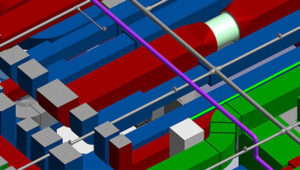
Structural elements clashing with mechanical, electrical, or plumbing systems is one of the most common and costly problems on Australian construction sites. When a beam runs right through where a duct is supposed to go, the entire team pays for that mistake with time, materials and contractor fees.
See how Why MEP Coordination Is Important for Clash-Free BIM Models supports clash detection and smoother project execution.
Inaccurate Material Orders
If the measurements are not accurate, then you cannot place orders for the materials in the right quantity. Ordering too much will result in waste, while ordering too little will cause delays. Both scenarios are avoidable with the right data from the start.
Rework and Project Delays
Studies consistently show that rework accounts for a significant portion of total construction costs. And the most common cause of rework is that teams often get inaccurate or incomplete information to work with.
5 Ways Scan to BIM Eliminates Errors on Site
Here’s exactly how Scan to BIM Services tackles the most common construction problems, right at the source.

Millimetre-Level Accuracy
Scan to BIM Services uses LiDAR laser scanners to capture a building’s existing conditions with an accuracy of millimetres. With this much accurate data, we don’t have to do any guesswork or estimation. The scanner rightly captures what the model is reflecting, and this precision helps in making accurate designs and making coordinated decisions.
Learn how Understanding LiDAR Technology in Scan to BIM enables millimetre-level accuracy for precise building documentation and coordinated design decisions.
Automated Clash Detection
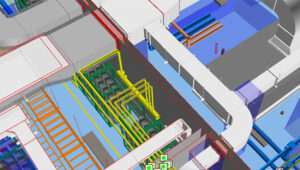
Once the point cloud data is converted into a BIM model, software tools can automatically detect clashes between structural, architectural and MEP systems. Teams can resolve these conflicts on screen, before a single worker picks up a tool on site.
Better Communication for Remote Teams
A detailed 3D model is far easier to share and discuss over with teams than a set of 2D drawings. With Scan to BIM modelling services, engineers in Sydney, architects in Melbourne, and contractors on a regional site can all work from the same accurate model, in real time.
Precise As Built Documentation
Scan to BIM services produce as built documentation that shows exactly what has been built, not what was planned. This documentation proves very useful for future renovations, compliance checks and facility management.
Faster Approvals and Compliance
Australian projects must follow strict council and safety regulations. Accurate BIM models make it much easier to prepare documentation for approvals, avoiding the back-and-forth design changes that delay so many projects.
Industries That Benefit from Scan to BIM in Australia
Scan to BIM services are making a real difference across a wide range of sectors in Australia.
Healthcare Projects
Hospitals need to operate 24/7 while renovations happen around them. Scan to BIM Services provides healthcare project teams with precise data on existing MEP systems and spatial layouts, so work can proceed with minimal disruption.
Read How Scan to BIM is Transforming Healthcare Facility Management to understand the role of Scan to BIM in maintaining uninterrupted healthcare operations during construction.
Commercial Buildings
Office towers and retail complexes regularly undergo upgrades and fitouts. Scan to BIM Modelling Services ensures that new installations fit perfectly into the existing structure without unexpected clashes.
Infrastructure
Whether it’s roads, bridges and tunnels, infrastructure projects demand high accuracy across big construction projects. Scan to BIM Services provides the data foundation that keeps these large-scale projects on track.
Renovation and Retrofit
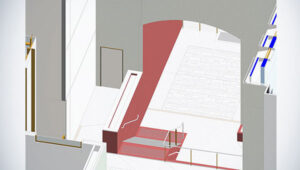
Old buildings rarely have reliable documentation. For renovation and retrofit work, Scan to BIM is often the only way to get an accurate picture of what’s already there before any changes are made.
Learn how Scan to BIM streamlines renovation planning, clash detection, and as-built documentation in Australia in our detailed guide on Why Scan to BIM is Critical for Renovation Projects in Australia.
How Scan to BIM Works: From Laser to 3D Model
The process is simpler than it sounds. Here’s a quick breakdown of how it all comes together.

The Site Scan
First, a technician places a LiDAR laser scanner at multiple positions across the site. The scanner rotates and captures millions of data points from every angle of walls, floors, ceilings, columns, pipes and more.
The Point Cloud
Then, all these data points combine into what’s called a point cloud, which is a dense, 3D digital representation of the physical space. It looks like a cloud of coloured dots, but it holds extremely accurate spatial information.
3D Modeling
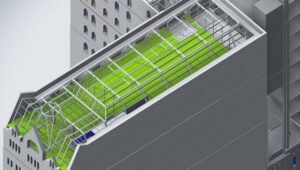
BIM specialists then process the point cloud and build an intelligent 3D model from it. This is typically done in Autodesk Revit. Every wall, beam, duct and pipe is modelled as a real object with real dimensions, ready for coordination and design work.
Why SmartCADD is the Preferred Partner for Scan to BIM in Australia
When it comes to choosing a Scan to BIM services company in Australia, experience and local knowledge matter enormously. SmartCADD has built a strong reputation as a trusted Scan to BIM services provider for construction teams across Sydney, Melbourne, Brisbane and in other Australian cities too.
Expertise in Local Standards
SmartCADD understands Australian building codes, council approval processes, and compliance requirements. We deliver models that work within the regulatory environment in which Australian projects actually operate. Whether it’s a heritage restoration or a large commercial fitout, their Scan to BIM services are tailored to meet local expectations.

Technology-First Approach
SmartCADD uses the latest scanning hardware and BIM software to deliver Scan to BIM modelling services that are both fast and highly accurate. Our workflow covers architecture, structure, and MEP at a single place, meaning clients don’t need to coordinate between multiple vendors.
We also support Point Cloud to Mesh, Scan to CAD and full Scan to BIM workflows depending on what the project demands.
Proven Results
SmartCADD has successfully delivered Scan to BIM services across residential, commercial, hospitality, and infrastructure projects of all sizes. This diverse project experience has earned the trust of clients across Australia, who rely on SmartCADD for accurate models, clear communication and dependable on-time delivery.
Conclusion
Construction errors are expensive, stressful and take a lot of time to be corrected. But with the right tools, they can also be avoided. Scan to BIM services give Australian project teams the accurate, real-world data they require to design smarter, coordinate better and build with confidence.
From clash detection to as-built documentation, the benefits are clear across every phase of a project. And when it comes to who delivers those Scan to BIM services at the highest level in Australia, SmartCADD continues to be the name that project teams trust.


